
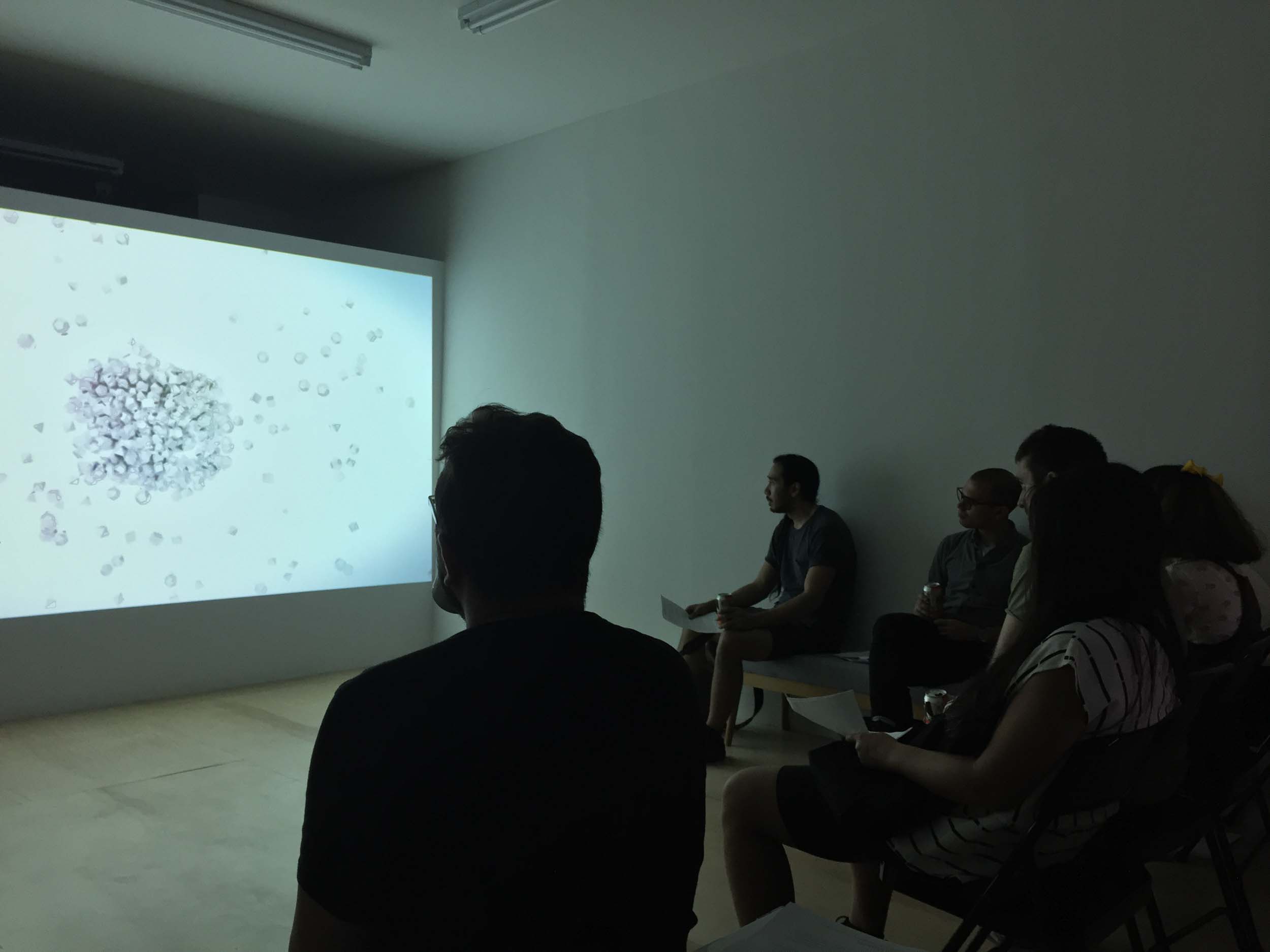
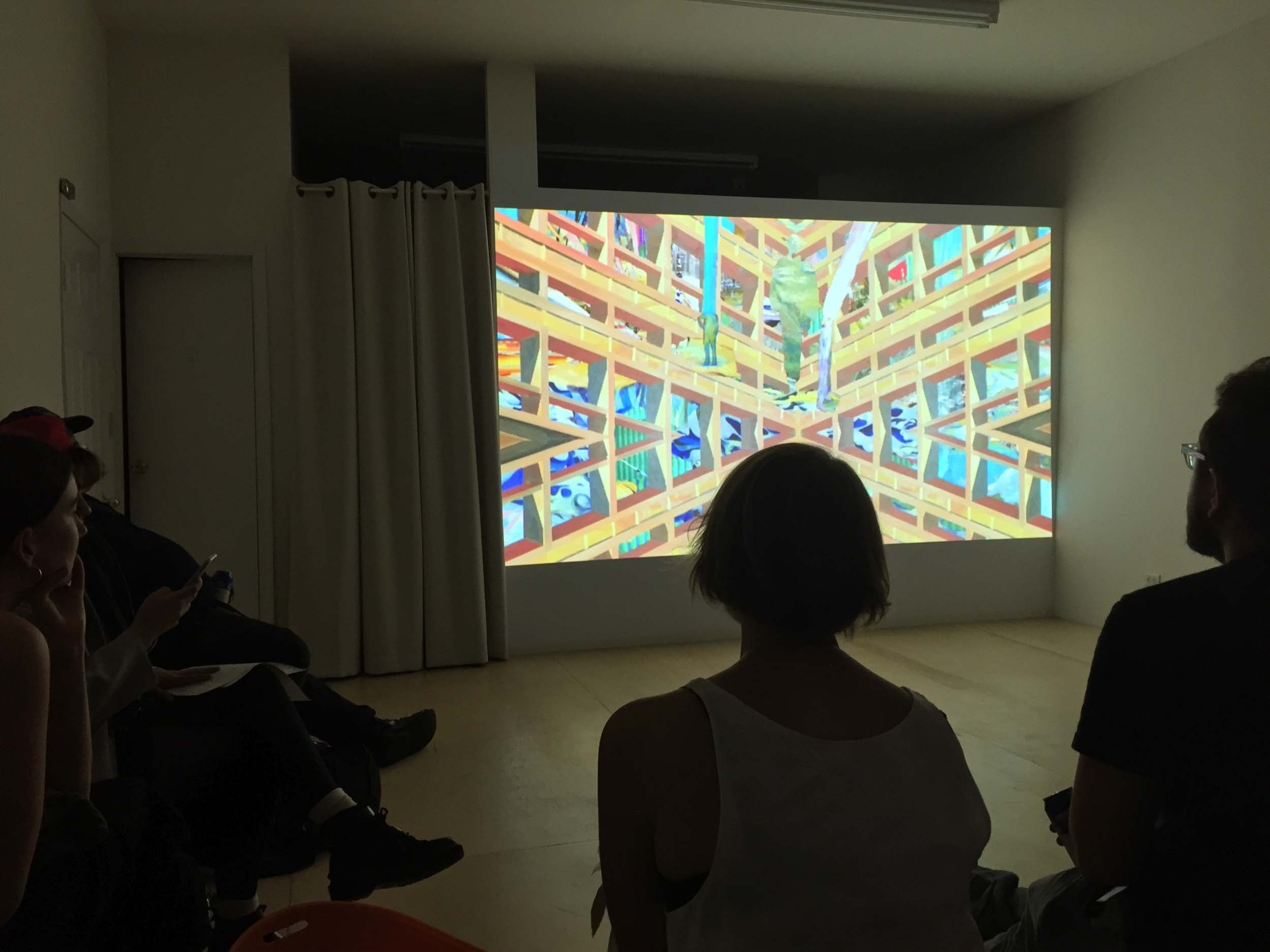
Permeable Boundaries features screen-based video and new media art exploring constructions and transgressions of membranes, borders, and boundaries.
Arnaud Laffond, Cari Freno, Carla Knopp, Fair Brane, Federico Cuatlacuatl, Fernanda Bertero, Frank Wang Yefeng, James Bascara, James Proctor, Jan Adriaans, Jason Bernagozzi, Jason Isolini, Joe Hambleton, Kimberlee Koym-Murteira, Marcelina Pieniążek, Michal Žilinský, Nicol Eltzroth Rosendorf, Oana Clitan, Pete Burkeet, Shadia Heenan, Snow Yunxue Fu, T2R, Timothy David Orme, Tina Willgren, Tom Burtonwood, Tyler Bohm, Will Rahilly
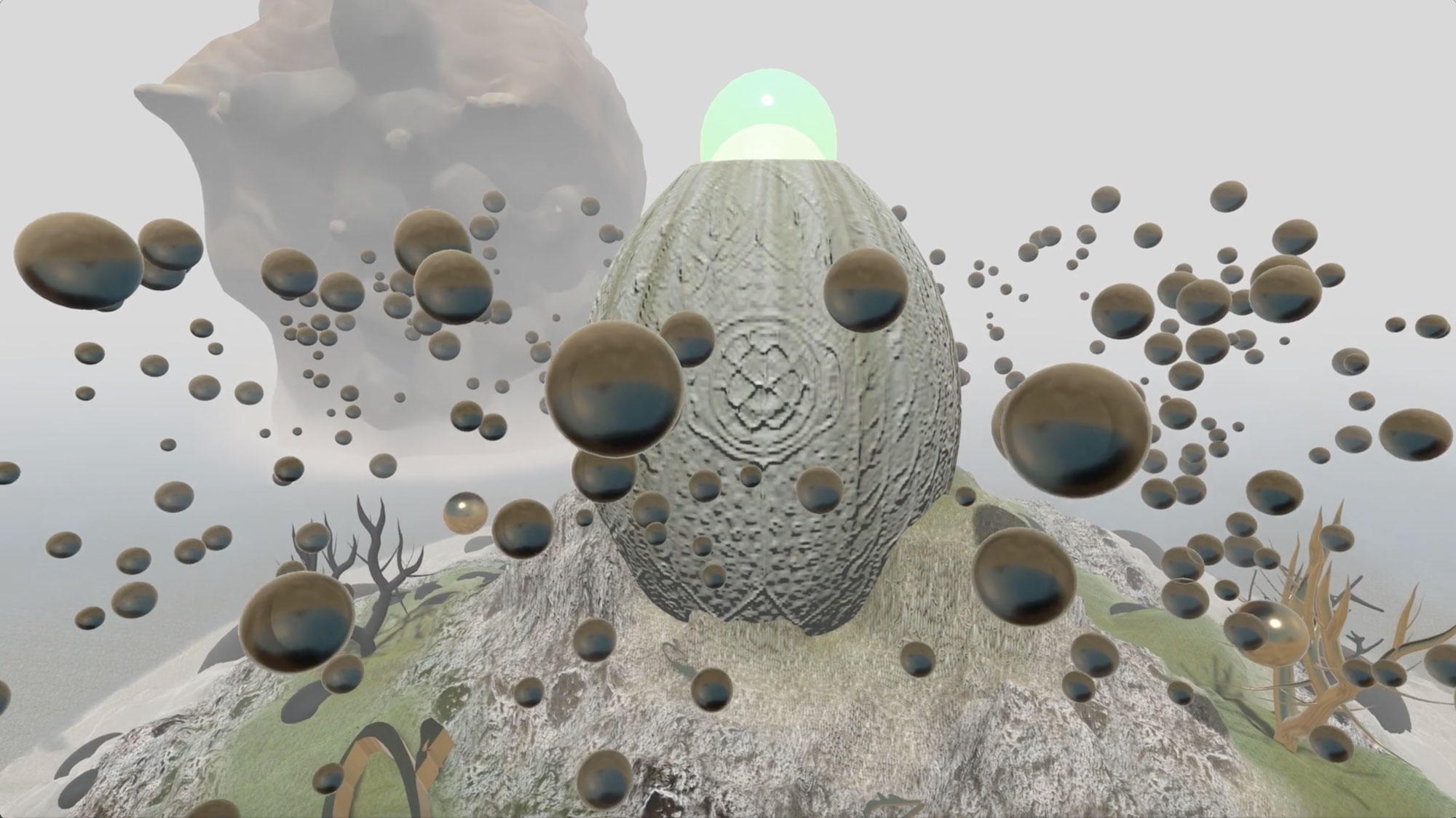
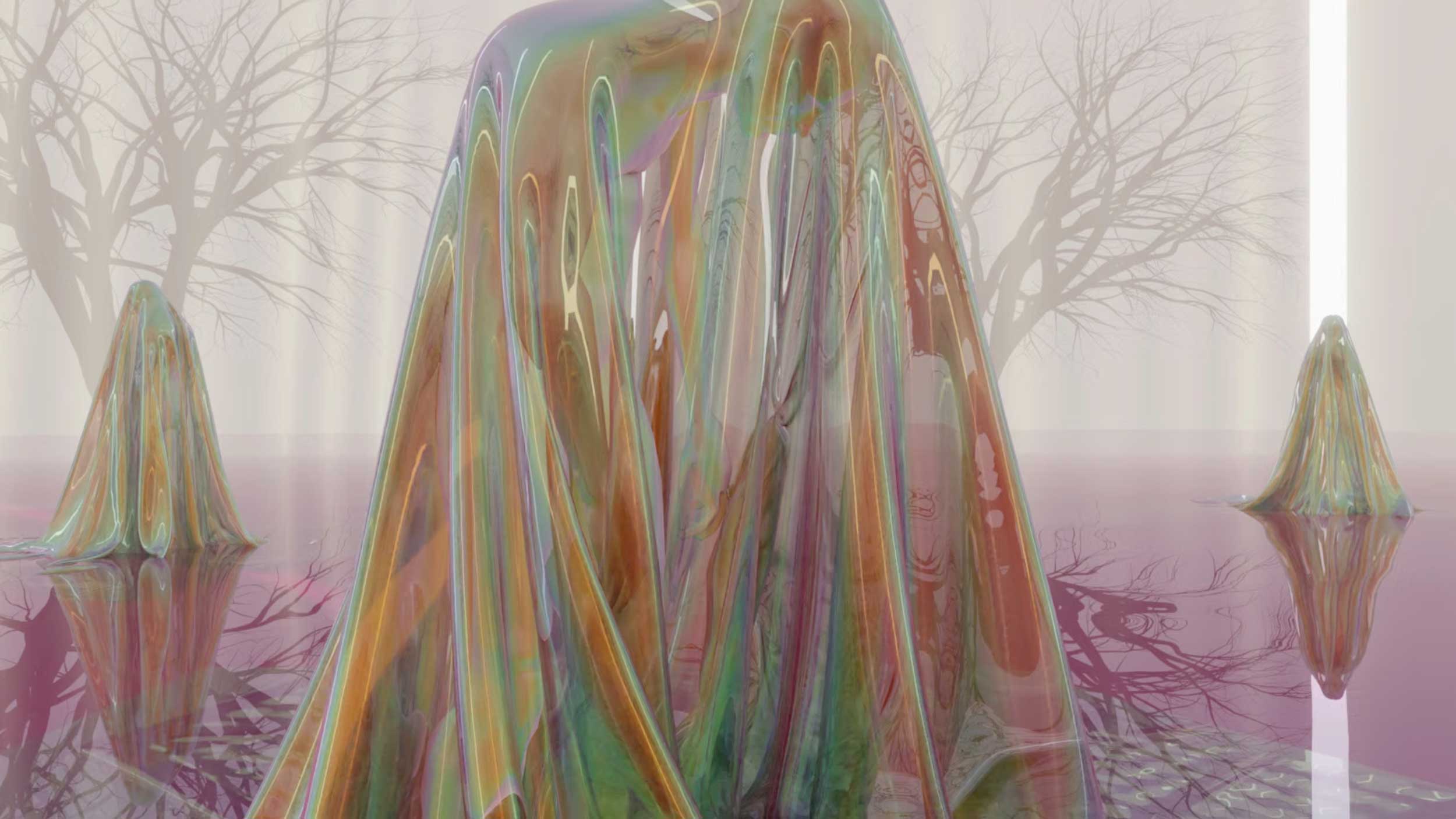
ARNAUD LAFFOND: CLOUD: Walk in the Mist — This is a video that invites to a spiritual journey through colors and abstract forms. A video where everyone can find his interpretation, as when we find a shape has a cloud.
CARI FRENO: A Dubious Procedure — This is a dual channel video work that reflects on personal development and influence. It weaves through, and questions notions of home, family, environment, and culture to consider and deconstruct evidence of the self. Freno takes a cross section of personal observations and finds parallel occurrences in nature and the world of domestic “civilization”. Through the juxtaposition and editing of documented excerpts from life, she probes for answers to questions concerning connection, relationships, and an ever-present source of dread.
CARLA KNOPP: The Day After Tomorrow — This originated several years ago as a painting title. It’s about hope that is coming soon, but not yet here. The painting was made during a period of personal grief. The current video version offers a similar message of impending relief, but is directed toward a broader dystopia with a less promising outcome. Carla Knopp is a contemporary painter making virtual reality environments. For over 30 years she created paintings using an intuitive process that yielded mysterious places and events.
FAIR BRANE: Centered — This is a subjective interpretation of Vito Acconci’s 1971 video piece “Centers”. Centered pays homage to the late filmmaker as well as to his female identifying contemporaries of that era who also championed the subversive art of experimental film. fair brane is a filmmaker based in Los Angeles.
FEDERICO CUATLACUATL: Carnaval — This investigates an immigrants ability to construct multiple dimensions of time and space. The future becomes the past and the past becomes the future because of an immigrants desire to simultaneously live in the past, present, and future. An immigrants ability to construct multiple dimensions of space happens through the preservation of culture and traditions.
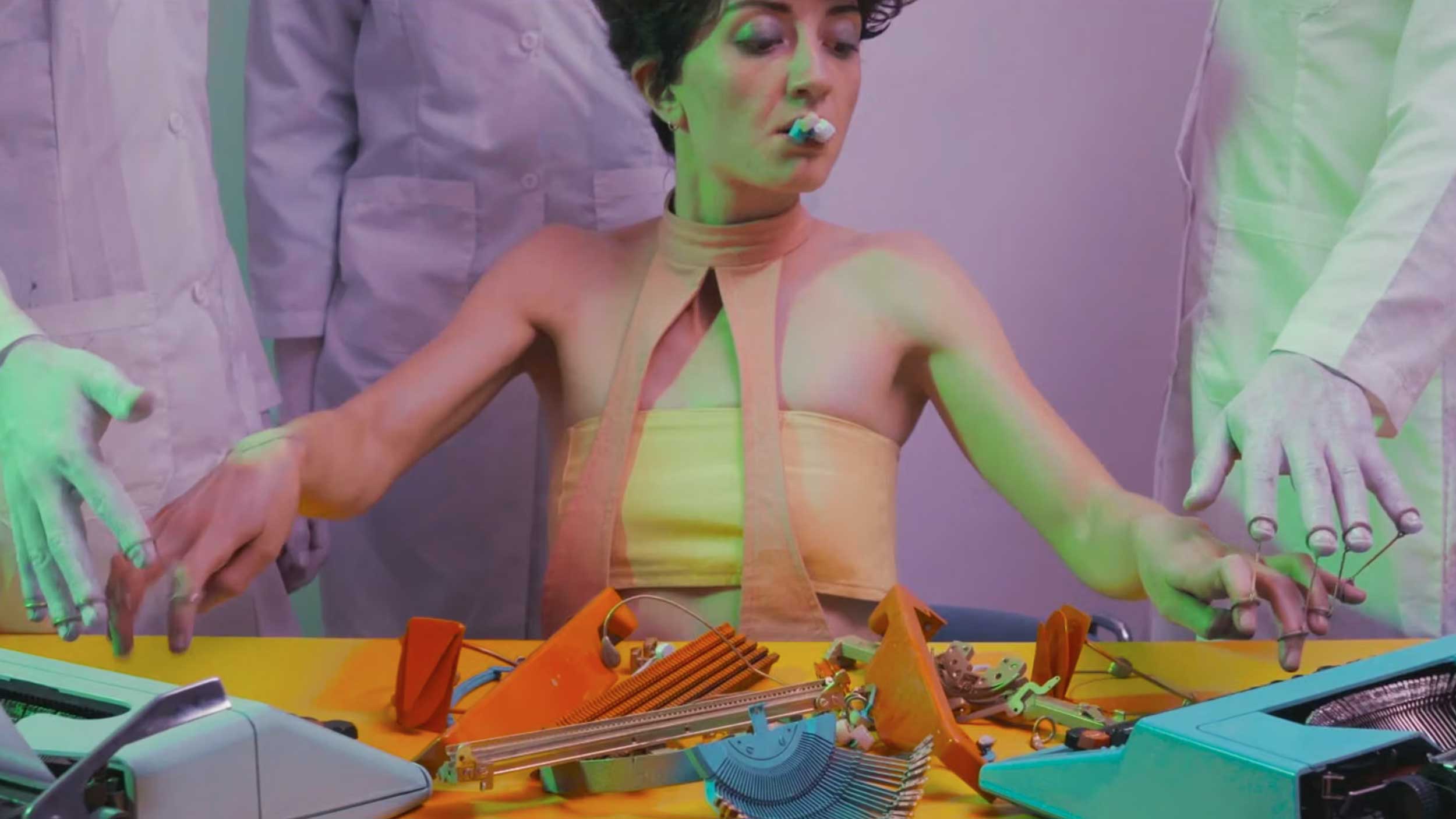
FERNANDA BERTERO: Technolapse — This is a video art about technolust and its reinterpretation, questioning our ways of doing, since they are molded by technology. The performer, interacts multi-sensorially with a typewriter (mechanic archetype) and with an external manipulation in a game, this process is materialized in the form of body extensions. “Heal the mechanization with the same machine, speak with an inner device in its programmed language, and touch the spectator in the same keys”.
FRANK WANG YEFENG: [’penthaus] — A story in the old Chinese book “A New Account of the Tales of the World” has been staying on my mind. In the story, the Wei Jin period drunk poet Liu Ling was lying wasted and naked in his house, and claimed the universe as his house, and his house as his underpants.
JAMES BASCARA: Q — A bashful encounter.
JAMES PROCTOR: Model City — This investigates the urban form as reflected by pathfinding algorithms and satellite imagery. It raises questions about how what we choose to measure determines what we see, and how that effects our decisions for the future.
JAN ADRIAANS: Stay — This moves between floating through an abattoir where fresh slaughtered livestock is vertically stored and moved around in this almost perfectly hidden horror of death, and a peek into a shop window, where commodities are on display, waiting for a buyer in their best possible appearance. Starting from Wilfrid Sellars theory on the self: If the abattoir represents our scientific self; our matter, our genetic material, our flesh and bones without moral or ethics. In the image of the shop window our manifest self is reflected, a self constructed in a social context, a world of abstractions, of language and reasoning.
JASON BERNAGOZZI: Form: Data: Form #9 — This is a series of nine HD video performances in which I explore post-structural themes through the deconstruction of visual, textual and spoken language. My movements shift from my mouth to my hand to my eyes as the audio and video processing distorts and abstracts my words, text and body in real time. A meditation on the dimensions of dialogue and meaning though a weave of ambiguous yet reflexive forms.
JASON ISOLINI: Town Square — I use the navigation of our desktops as a performance where I’ve published a “Photosphere” to Apples fifth ave store accessed from Google Street-view. The collage combines consumer products with types of pubic barriers as Apple no longer identifies its locations as retail stores, but “Town Squares” further merging the idea of consumerism into the public realm.
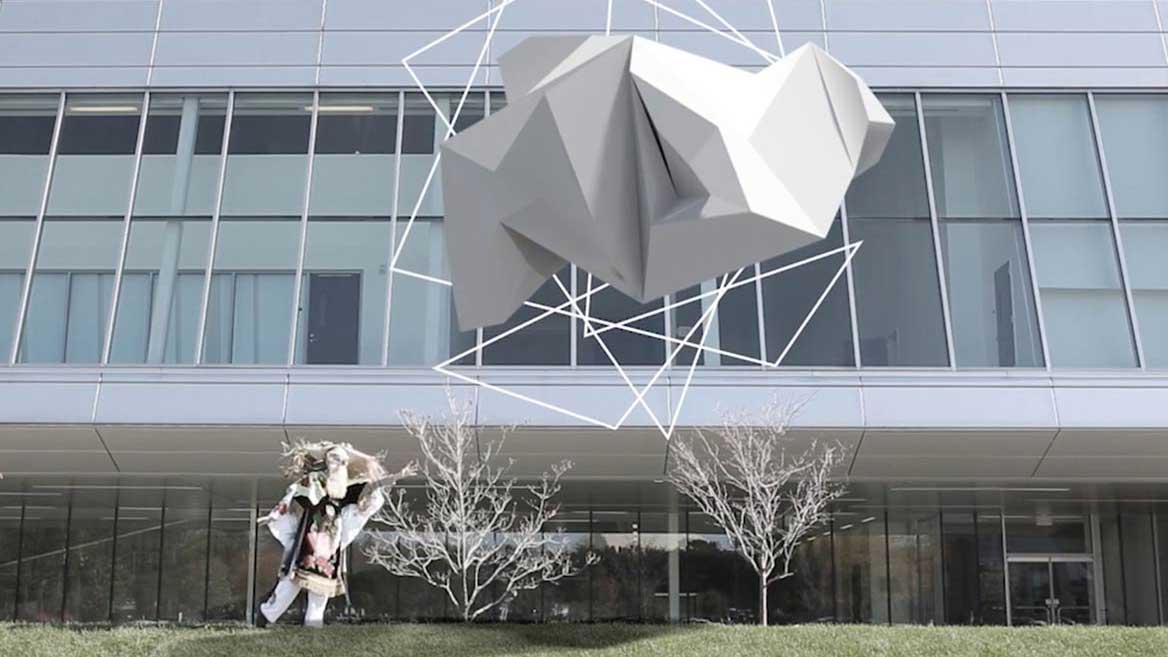
JOE HAMBLETON: Perambulation — With the adoption of automation, the separation between digital and physical has become less apparent. Through algorithm-based data analysis, the information gathered by digital devices can portray facts and truths that aren’t necessarily perceptible to the senses. In “Perambulation”, Hambleton explores a process that both embraces and rejects the inescapable reliance on digital technology. He began by embracing the role of the data processor, observing the body language of people moving through public spaces. He encapsulated their tendencies in a series of choreographed movements, transcoded to animation through motion capture sensors. Through performance, Hambleton believes he gained an awareness of the subject matter that’s not present in the motion capture data. To imbue the animation with this insight, he manually altered the data to better represent his findings. The result is a work that strikes a balance between the empathy of human observation and the actuality of machine analysis. Joe Hambleton uses video and animation to create experimental narratives that explore his experiences and environment.
KIMBERLEE KOYM-MURTEIRA: Lilac Fire — As Koym-Murteira integrates kinesthetic processes with moving image she finds a different way to be with the natural disasters of 2017. Projecting video through water, mixing electricity and water. Koym-Murteira brings somatic resonance to the digital realm. Using water, video, and mason jars, Kimberlee creates a branch of new media arte povera. From small sculptures to large scale video projection machines she uses light, water, and movement to reflect people. They mark intersections with technology and the everyday, somatic resonance and connections between the virtual and physical; pathways between the environment and people.
MARCELINA PIENIĄŻEK: Sophia reset — The imitation of human skin helps the humanoid robot Sophia look as similar as possible to a human. The hand melts to reconstruct again. Nowadays, the society is concerned about the future. Is AI going to be equal to our intelligence? Are we gonna exceed ourselves and agree on the extinction of human beings?
MICHAL ŽILINSKÝ: Abandoned Cathedral — The cathedral of unknown name located in the Zone at Level -01, just under the surface. There is a couple of important factors in Michal Zilinsky’s artworks: temporality, instability of the material essence of things and an existential effort to preserve. He morphs (often altered) historical past of places, artefacts and events into drawings and videos. Seemingly unthinkable non-existent virtual space of his CGI moving images underlines updated vanitas theme. The themes that are reoccurring in his work are the transitions between the outside world and the inside and the special topography - intensive, exhaustive descriptions of places. In precise drawings or rendered 3D animations, it is almost possible to zoom in, moving from one detail to the next. The consequence to the uncompromising approach to technical work is that every place he’s creating must be inhabited for some time.
NICOL ELTZROTH ROSENDORF: Lemniscate: ‘Desire Urges Me On, While Fear Bridles Me’ — Cyclical events in a liminal space of shifting & indeterminate scale; embodied collectively in probing, contingent & instinctual arrangements.
OANA CLITAN: Anthropolabour — Starting from ideas described in Kurt Vonnegut’s novel “Player Piano”, a dystopia on automation, “Anthropolabour” is a series of animated GIF collages reflecting on the influence of technology on labour and our society’s relation to labour nowadays. The looping nature of the GIFs is therefore mimicking the repetitive movements of a machine or engine. Oana Clitan’s practice falls at the intersection of design, art and media. Using her background as a designer intertwined with her upbringing in post-communist Romania, Oana’s work playfully deconstructs different media content and outputs and reflects upon our everyday relationship with technology and media. The end results of her process are collages, textiles, installations, animations and websites.
PETE BURKEET: A Thousand Rainbows — Pete Burkeet is a collage artist who combines mediums and techniques in unconventional ways. He is drawn toward an aesthetic that rejects the cleanliness of current digital trends.
SHADIA HEENAN NILFOROUSH: Chant to Save — This is a split-screen single channel video performance revealing mirror selves, made opposite by independent rituals. The Islamic prayer, coupled with the audible call-to-prayer, juxtaposed alongside the yoga asana, coupled with the audible Gayatri mantra, suggest blending and blurring. The audio sources become inseparable to the unsuspecting ear and the movements become ceremonial and dance like. This video seeks to propose a merging of dualities, to create a third self, evolved of the two roots. Shadia Heenan Nilforoush’s work seeks to reconcile multiple identities, while questioning what it means to occupy space in and between multiple cultures. She explores what happens when we shift between cultural identities and considers the emersion of a third self, as a result of failed integration.
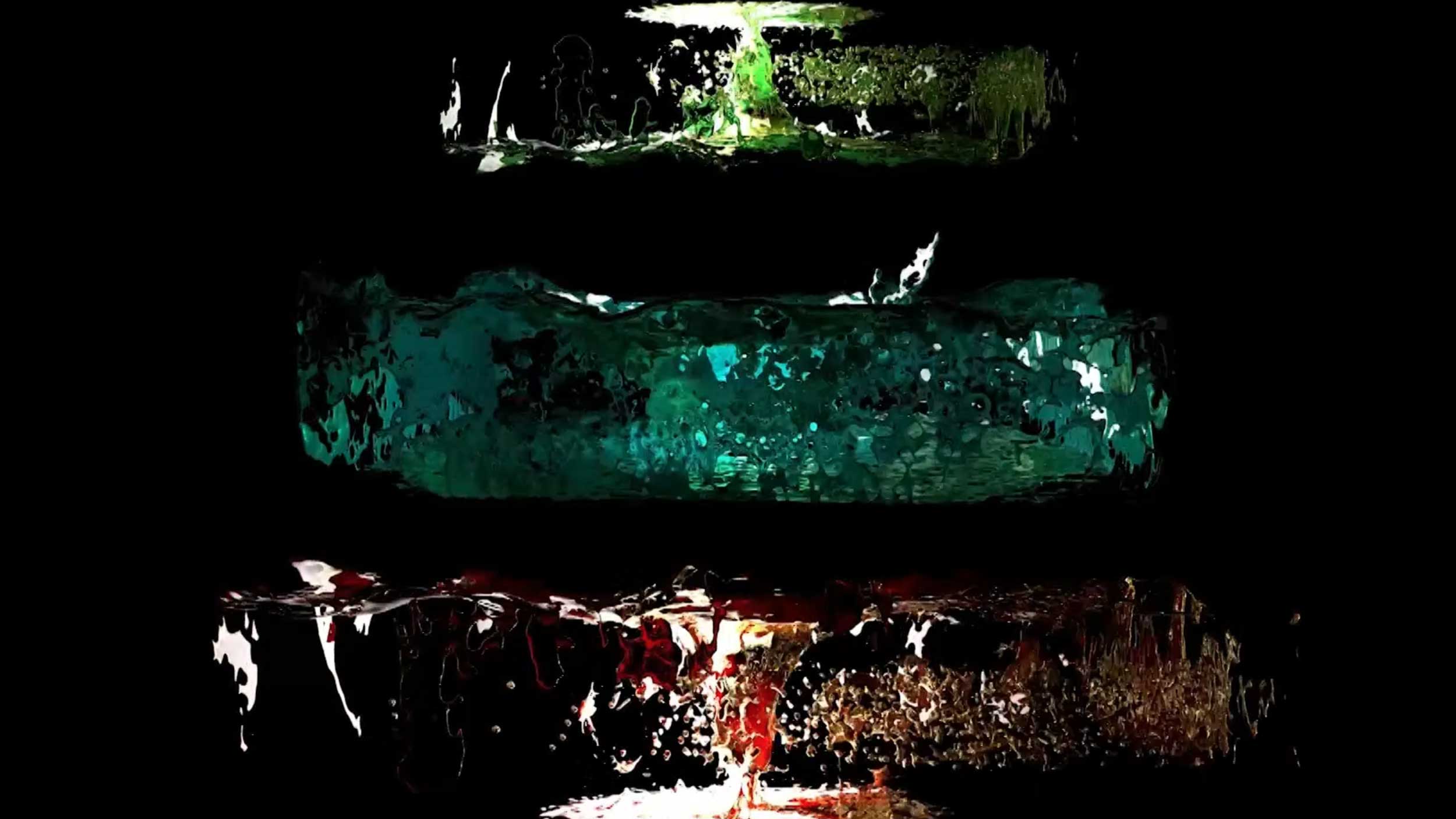
SNOW YUNXUE FU: The Chambers — This is a multi-channel video installation made by the Chicago based new media artist Snow Yunxue Fu. The installation is consisted of columns of digital simulated waters, storming in natural and unnatural movements. The virtual liquid moving sculptures layer with repeated intervals going back and forth. Wild yet controlled, real yet digital, providing a limited opening for the viewers to interface with the subliminal imaginary nature. Snow Yunxue Fu’s artwork approaches the subject of the Sublime using topographical computer rendered animation installations. She examines and interprets the world around her through digital reality, where she draws a parallel to the realms of the physical, the virtual, the metaphysical, and multi-dimensionality.
T2R: Content Fills a Space — T2R’s work focuses on the intersection of consumerism with social media. Much of her research has been directed towards sites like Instagram and Facebook which feature lifestyle imagery, bloggers, and digital advertising. She is interested in the absurdity of this content and how the individual’s attention has been commodified into an economy of “bottomless” scrolling. She is particularly engaged with the construction of identity and self-critique as its affected by the interface’s hyper-marketplace. Much of her practice engages with multimedia: video embedded into sculpture, digital photocollage and text, and interventionist performance. She often uses a persona in her work, T2R (#Time2Reflect), to reflect the anxiety and alienation that identity experiences in some of these dissociative, online spaces.
TIMOTHY DAVID ORME: Sonant — Squares, sound, and speed all voice a space that builds to collapse.
TINA WILLGREN: Arrived at Scene — “Arrived at Scene” is based on illustrations of traffic police signs, which have been distorted by manipulating the source file data, and subsequently animated. A world reminiscent of a traffic chaos or a crime scene comes forth. Shapes change in a disorganized way and morphing figures give disarranged directions.
TOM BURTONWOOD: Up, throughout, a loosening, put, into a whole — A video in three parts. First an analysis and apprehension of the DEMO Project structure, a residential house in Springfield IL, then individual fragments rotate on multiple axes, images from the DEMO Project exhibition archive are superimposed on their surfaces, referencing the history of the structure. The third section begins with the screen fading to black, from the top of the frame fragments fall. The frequency increases to a deluge before returning to nothing.
TYLER BOHM: Black Hole — This work is an altered version of the climatic scene from the 1979 film “The Black Hole”, during which the crew are sucked into a black hole. The scene is reversed, with each frame warped into a circle. The work evokes the temporal and spatial distortions of warped space-time.
WILL RAHILLY: Music Video for Maraschino Mic drop — In a pristine art gallery, white pedestals hold precious pieces of bizarre porcelain artwork. The pedestals grow tired of this designation—their interiors are shown to belie a white surface, bubbling with muscle and rage. Once freed they rebel, and attack the artwork in this rapid-fire animation.
100% tax deductible donations supported by Fractured Atlas