
RESIDENCY EXHIBITION SERIES
MAY 1 – JUN 1, 2026
Julia Oldham
Flux
“Flux” features new moving image artworks by interdisciplinary artist Julia Oldham. The exhibition includes videos created in collaboration with scientists, using specialized scientific image tools and data sets. “September: Orange” was created with the Phenocam network of hundreds of automated cameras installed on research towers around the world. “Invisible Red” reveals solar induced fluorescence (SIF) through the faint glow emitted by chlorophyll that has been activated by the sun. Together Oldham’s haunting videos evoke speculative futures through translational technologies using data from the past.
“…My version of the data does not emphasize legibility, but instead expresses its mysterious and elusive quality…”
— Julia Oldham
Julia Oldham is an artist living and working in Eugene, OR. Oldham’s work has been shown widely, including exhibitions and screenings at the Queens Museum, Queens, NY; Smack Mellon, Brooklyn, NY; MoMA PS1 in Long Island City, NY; the Northwest Film Center at the Portland Art Museum, Portland, OR; the San Diego Art Institute, San Diego, CA; The Drawing Center in New York, NY; The Bronx Museum of Art in the Bronx, NY; The Museum of Contemporary Art in Chicago, IL; Oregon Contemporary, Portland, OR; and the Peabody Essex Museum in Salem, MA. She has been supported by Artadia, the Fund for Art and Dialogue; NYC Urban Field Station; Artist in the Marketplace at the Bronx Museum of Art; the Lower Manhattan Cultural Council; the Oregon Arts Commission; The Ford Family Foundation; and the City of Chicago Department of Cultural Affairs. Her work has been reviewed in the New York Times, Washington Post, Wall Street Journal, and the Village Voice, and has been featured on the NPR shows “State of Wonder” on OPB and “Inquiry” on WICN.
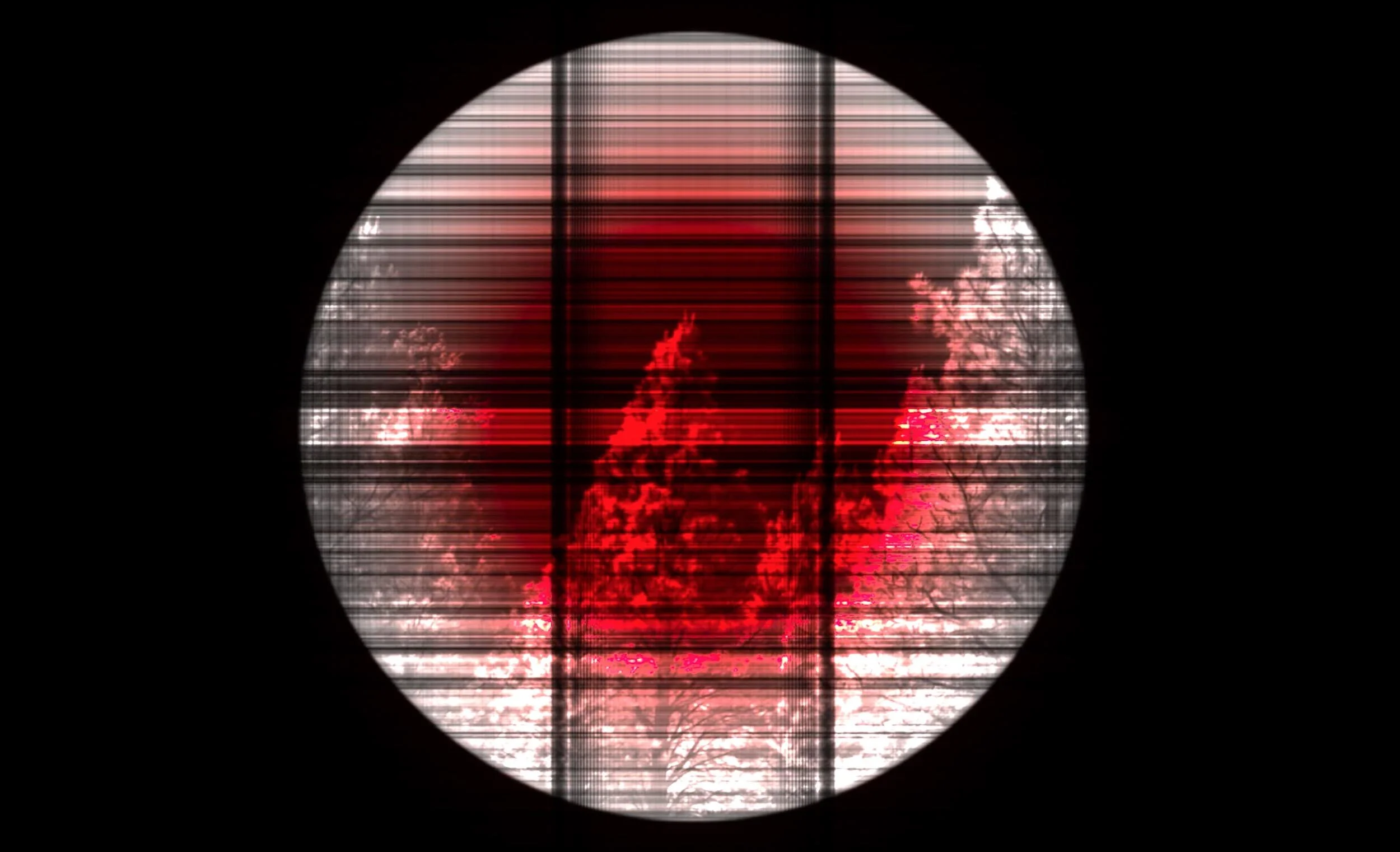
Invisible Red, single channel video with sound, 2026
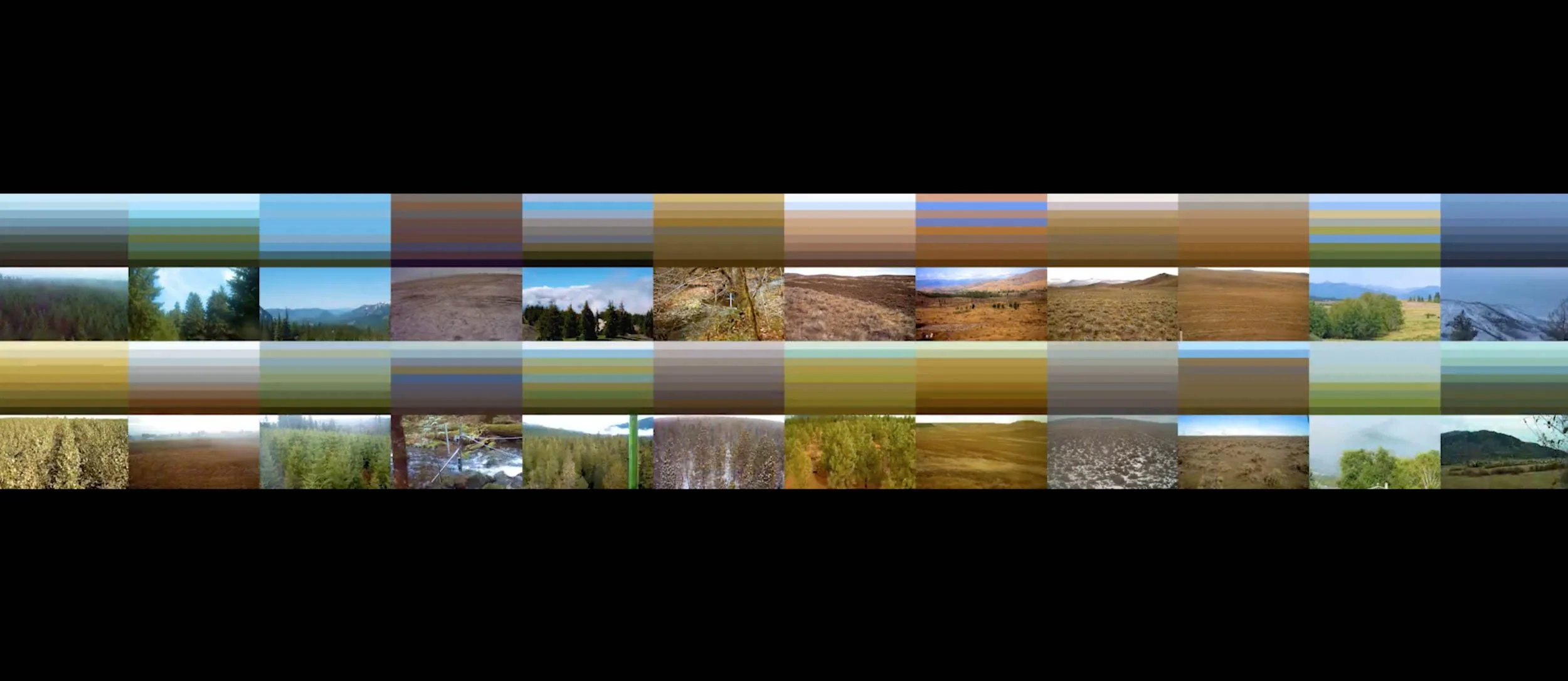
September: Orange, 3-channel video with sound, 2026
About the Work
Solar induced fluorescence (SIF) is the faint glow emitted by chlorophyll that has been activated by the sun. This direct indicator of photosynthesis is not visible to the human eye, falling in the far-red and near-infrared range of light wavelengths. However, it can be imaged by scientists using FloX, an instrument that captures detailed spectral data. Invisible Red interprets SIF data gathered by Dr. Loren Albert at Oregon State University in a ponderosa forest research site near Sisters, OR. This video animates a sequence of forest images, each depicting one of 2000 wavelengths of chlorophyll fluorescence (ranging from 650-780 nm) captured by FloX. I assigned the invisible SIF wavelengths a color index ranging from black to a deep and barely perceptible red. My version of the data does not emphasize legibility, but instead expresses the mysterious and elusive quality of the SIF glow. The soundtrack of Invisible Red sonifies the changes in radiance captured in the spectral data and includes electromagnetic signals recorded at the research forest and trranslated into sound waves. This project was supported in part by the Center for the Future of Forests and Society at Oregon State University.
The Phenocam network is an ecological observatory with hundreds of automated RGB cameras installed on research towers around the world, several of which have been operating for over a decade. The millions of images collected at 30-min intervals are available in an open source format and used by scientists across the globe to study phenology: recurring plant life cycle events like leaf-out, flowering, and senescence. By looking at color data in Phenocam images, especially “canopy greenness,” scientists learn about the state and health of a landscape over time and compare ecosystem state with other measurements of ecosystem functioning, including carbon uptake and evapotranspiration fluxes. In this three-channel video, created in collaboration with Dr. Christopher Still, Professor of Forest Ecosystems and Society at Oregon State University, I look for moments of color unity among 24 Phenocam streams in the Northwest US and Canada, pausing when the landscapes all turn the same shade. I am especially interested in the orange that appears cyclically during wildfire season. The soundtrack for September: Orange combines field recordings from Oregon forests with data sonification. This project was supported in part by the Patricia Valian Center for the Creative Arts and fluxART.