
"Future Artifact" is an exhibition of screen-based new media artworks curated by Laura Splan for Creative Tech Week. These short videos and animations represent a variety of technologies which contemporary artists are using including computer-generated animation, data-driven imaging, 3D scanning, custom software, animated GIF's, as well as conventional digital video editing. This is the second installment of "Future Artifact", with the inaugural screening presented in conjunction with Creative Tech Week 2016 at Dose Projects Space in Brooklyn.
Aaron Higgins, Alex Lee, Brett Wallace, Bubblegum And Whiskey, Channel TWo, Chen Wang, Christina Smiros, Colin Rosati, Dan Nelson, David Bowen, Encoded Objects, Eric Souther, Fai Ahmed & Magda Magdy, Fengyi Zhu, Henry MacDiarmid, James Proctor, John C. Kelley, Jonathan Perez, Keaton Fox , Khalil Charif, Kimberlee Koym-Murteira, KK de La Vida, Liam O'Connor, Maggie Hazen, Marjan Moghaddam, Mark Ramos, Mikey Peterson, Momma Tried, Myriam Thyes, Peter Whittenberger, Reginald Brooks, Sangjun Yoo, Shelby Shaw, Smisko Ackerman, Sophie Kahn, Taryn Ward, Timothy Earl Neill, Wayne Madsen

AARON HIGGINS: Memory Form (1) — “Memory Form (1)” is inspired by saturated electron microscopic images of the human brain, and various images of our universe taken by the Hubble Space Telescope, among others. It is amazing how similar these images can sometimes appear, and their magnificence and beauty is striking. Not wanting to simply recreate these images in moving form, but rather use them as a starting point, these works have an ambiguous sense of scale and space, reminiscent of the brilliantly colored images of our physical and cerebral universe.
ALEX LEE: Everything from Here to Infinity — “Everything from Here to Infinity” is an immersive virtual reality installation (this is video version) in which objects within the most comprehensive map of the universe to date, the Sloan Digital Sky Survey (SDSS), are depicted in the manner of abstract expressionist gestures. A random sample of 10,000 stellar objects is pulled from the database (Data Release 13) to be visualized at any given time. Sound is pulled from Jon Jenkins’ sonifications made from Kepler star observations, from the University of Birmingham’s resonant acoustic oscillation recordings of stars in ‘M4’, as well as recordings of cosmic background radiation.
BRETT WALLACE: AMAZING INDUSTRIES Floating Factory — “AMAZING INDUSTRIES Floating Factory”, is a speculative video based on an actual Amazon patent. Wallace re-imagines what the future of work could look like in an automated factory by taking us on a new employee tour. We become an organ to a hellish factory that floats above a city and deliver goods to the city below. AMAZING INDUSTRIES is an ideological research and development startup created by Brett Wallace. AMAZING INDUSTRIES mission is to explore possible futures of work that are humane and equal. AMAZING INDUSTRIES is an ongoing artwork that aims to demystify the future of work and advocate for a better future for workers.
BUBBLEGUM AND WHISKEY: Loves Me, Loves Me Not — “Loves Me, Loves Me Not”, a digital collage of colorful shapes, was designed with renders of 3D models and images of vintage floral patterns. Each section represents a specific fabric scrap from the 30’s and 40’s that has been passed down by generations of quilters in our family. Each frame has been manipulated to express a range of saturated hues as handmade glitches interrupt and compete with the steady stream of colorful shifts. The organic pieces almost fit together but remain frantically at odds with time and one another. The GIF can theoretically loop forever; it builds, it finds a rhythm, and it inevitably fails again.
CHANNEL TWO: Til The World Ends — “Til The World Ends” is a continuous set of station identifiers, imagined by software that continues creating and arranging them long after civilization has collapsed. Poppin’ bottles in the ice, like a blizzard, when we drink we do it right gettin’ slizzard. Everyone agrees that things can only get worse. See the sunlight, we ain’t stopping. Pushed out of the city centers, they find on the frontiers the kind of “neighborhood feeling” they missed in the prefab houses of suburbia and bumper stickers that say...”no other possibility.” Everybody is sad, but it’s a weird kind of sad.
CHEN WANG: utopia_process — “utopia_process “—Through a variety of elements including video and installation, I portray a satirical imaginary space based on our present-day society. The universe that I like to express is both utopia and dystopia. I express my personal mythology by creating different personas and construct a new environment that re-defines my identity. The costumes give me opportunities to seek and alter myself into different roles in my visual creations. The abstract figure and natural forms within the video create a fantasy space that reflect multiple realities. I use bright colors and optimistic aesthetics to challenge the boundaries of the physical body.
CHRISTINA SMIROS: AM/Projected Relation — “AM/Projected Relation” (short) is an excerpt video from the interactive video experience AM/Projected Relation. AM is a present fiction. She is a product of the data debris from a faulty system. She is not a solution, but she imagines. The Projected Relation is the abstract communicative space between AM and the viewer/user who interacts with her. Christina Smiros’ work explores interpersonal relationships in technophilic societies.
COLIN ROSATI: Underground I Didn’t Quite Catch That — “Underground I Didn’t Quite Catch That”—Exploring abandoned fiber-optic cable tunnels. The lights of the fibers as means of communication have exposed these tunnels, rendering perception and communication into echo chambers. Positive feedback loops are amplified in closed interface networks. The limits of perception and means of communication make dialectics that reveal their limits. This underworld alienates representation. Things are not always what they seem.
DAN NELSON: Pong Song — “Pong Song” is a video that plays with symbols, signals, and sounds to explore how humans communicate. It establishes a pattern using sound and motion which is then subverted with contemporary symbology. Dan Nelson is an interdisciplinary artist, musician, and author living in Oakland, California. He is the author of “All Known Metal Bands,” a 300 page book of 51,000 band names published by McSweeney’s.
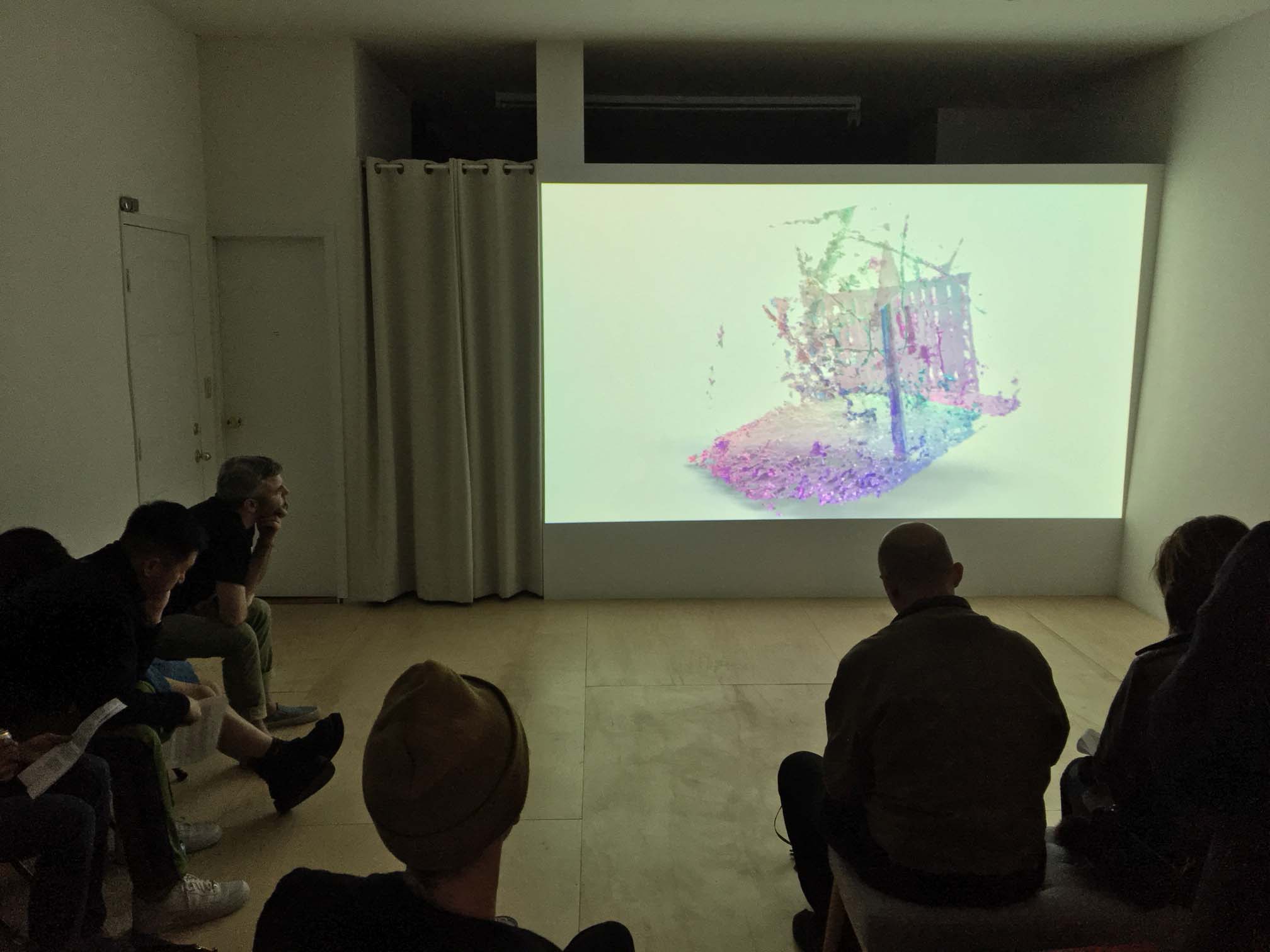
DAVID BOWEN: landscape #1 — “landscape #1” is a real-time video projection of point-cloud data streaming from a three-dimensional camera installed in an outdoor location. The video displayed consists of over 250,000 individual points, creating a 3D model of a living stand of trees. The color of the individual pixels shifts from blue to red to green in respect to their relative distance from the camera. This color shift illustrates the dynamic depth of the three-dimensional field giving the scene an artificial appearance and producing a formal contrast between the natural forms and the digital system collecting the data. As it monitors and collects real-time data from this location, the system relays an incomplete physical representation of a dynamic living landscape and fluid environmental conditions in digital form.
ENCODED OBJECTS: Future Artifacts - Endless Horizons — “Future Artifacts - Endless Horizons”—Due east of South Florida and the Bahamas, NOAA’s data buoy #41047 records hourly measurements of weather and water conditions while taking solitary panoramic photos of the Atlantic Ocean. These staccato snapshots of the buoy’s world seem so distant from our own landlocked lives, yet the two are intimately linked. “Endless Horizons” is a data-driven video work that invites the viewer to step into 41047’s world and become circumscribed by fluctuating sea and sky. The history of 41047 plays back over the course of minutes, quietly questioning the notions of time, permanence & impermanence, and our precarious relationship with the ocean. Encoded Objects is a collaboration between Jonathan Rockford and Michael Hadley that explores our connection to the environment through a technological lens. Their investigations begin with recorded information that leads to abstractions in representation - where the unseen becomes as important as what’s visualized.
ERIC SOUTHER: Ritual and Repetition — “Ritual and Repetition” was shot in Xiamen, China at the Nanputuo Temple. The experimental short film examines the ritualistic space of the temple as a site that engages a range of histories and religions (Buddhism and Confucianism) which day after day interacts with crowds of people coming to pray, sightsee, and explore the space. Eric Souther is a video and new media artist who draws from a multiplicity of disciplines, including anthropology, linguistics, religion and critical theory. His work takes many pathways, which includes single-channel video, interactive installation, projection mapping, and audiovisual performance.
FAI AHMED & MAGDA MAGDY: Philosophical Suicide — “Philosophical Suicide” is a collaboration between me, and Magda Magdy. It is an audiovisual video that uses narrative and sound/noise to explore both the possibilities and the alienating limitations of language. Composed of montage-like fragments it deconstructs the absence of meaning, systems failure and disrupting (mis)communication that govern our everyday life. Our daily speech has innate trial and error aesthetics. We can find beauty in that, in the faulty yet (un)intentional glitches and noises that are not really accidents but masked behind beautiful accidents embellished with syntax and semantics and other aspects of visual language that polish the horrid truth. It escapes the mundane sometimes, those audiovisual Freudian slips. That’s why we strive to catch them purposely and call them mistakes or digital errors. If you think about it, our entire existence is one beautiful mistake. One omnipotent glitch, after the next till we die and the transmittance stops. Do we emit noises or sound vibrations after we die?
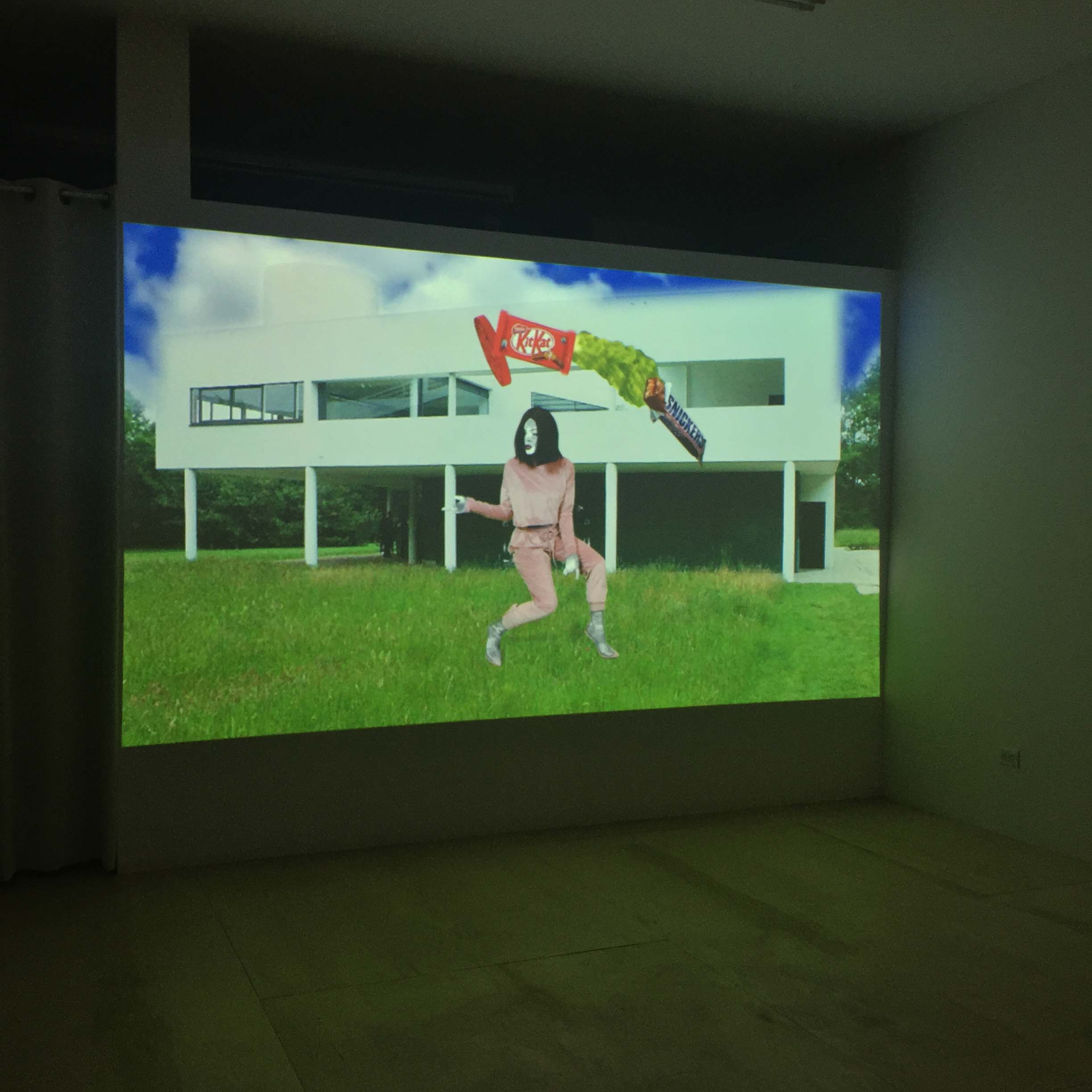
FENGYI ZHU: Suspicious of a drink — “Suspicious of a drink”—Scallion tea can kill gems. Brooklyn-based artist of Chinese heritage grew up in Beijing, Fengyi Zhu‘s practice engages with moving image and sculptures. By using commercial and cultural imagery and products, his works often aim to expose the relationship between visual culture and post-modern life.
HENRY MACDIARMID: Walk with Me to the Shadow of the Sun (Stars) — “Walk with Me to the Shadow of the Sun (Stars)” is inspired by staring at the stars. By transferring animation files between open source modeling programs and Adobe programs the result was a fragmented animated image of a Basic Male T-model obj. file. This video is composed of the animated images where the model performs a dialogue which addresses itself as a projected image while confronting the viewer’s presence. The dialogue written details a paradox on the idea of “the Real” by proposing that “the Real” has its own constructed understanding.
JAMES PROCTOR: Cat Ba — “Cat Ba” was created by altering underlying image data using custom pixel manipulation and algorithmic style transfer in an attempt to evoke the essential quality of a place. My artistic practice uses software systems to investigate the material systems that shape our experience of the world. James Proctor is a software artist and data visualization designer. He creates systems guided by a finite set of rules to produce visual outcomes that are unexpected, varied, and ephemeral.
JOHN C. KELLEY: Pause — “Pause” is a bittersweet illustration of nostalgia’s destructive nature. The recall of a memory causes it to literally deteriorate in a series of paused VHS images of 1980s suburban leisure. John C. Kelley is a media artist and musician living and working in Knoxville, TN. His linear and installed video and sound work explores ideas of mental and emotional erasure, memory loss and misremembering, through the upending of cinematic and musical conventions.
JONATHAN PEREZ: QualiaMetrics — “QualiaMetrics”—Considered as an intermix of surface level artifacts, the screen is a laboratory for the eye. An examination is performed by a misused medical video magnification algorithm attempting to amplify blood flow. The synthetic jargon of competing pharmaceutical bots becomes the functional script of a speed reading machine for a Quantified Self. Jon Perez is a video artist, educator, freelance writer and para-academic media theorist. His work explores post-appropriation moving image aesthetics in networked environments.
KEATON FOX: The Green Screen Paintings — “The Green Screen Paintings” use modern technology to examine at how far humans have progressed - as artists and as a species. We lose sight of the fantastic nature of technology because it is ever-changing. The rapid pace we are moving at today makes me nauseous. I created this series as a way to slow things down. As a plea to take the time to recognize our artistic accomplishments as a human race, as opposed to honing in on all of our endless faults. To urge viewers to realize the sheer madness of the mechanics of green screening and to contemplate the varying degrees of our art making over time. The color green overwhelms this series due to it’s peculiar duality - being the most natural and unnatural color of our time. It is the color synonymous with the unaffected environment, yet it is the same color used to digitally alter any given environment into a fantasy land of our choosing. This color reinforces the notion that nothing is as it seems - a concept that has become ever-present in these shifty times of questionable realities.
KHALIL CHARIF: Inventory of Time — “Inventory of Time “—In a New York City subway journey, a sequence plan examines a social aspect, searching for a reflection about our new era of profound human and technological changes – and its challenges. Khalil Charif is an artist born in Rio de Janeiro, Brazil. In late 90’s, studied at Parsons School and NYU, and obtained a post-graduate degree in Art History at PUC-Rio. Among his exhibitions are: “XIX Bienal de Cerveira”, Portugal, 2017; “Dublin Biennial”, Ireland, 2014; “Triennale of Contemporary Art”, Czech Republic, 2008.
KIMBERLEE KOYM-MURTEIRA: Rainbows in my clouds — “Rainbows in my clouds“—Drawing strength from the African American poet Maya Angelou, I ask her to walk with me into the new year as I create crystalized rainbows in my clouds. Maya acts a beacon of how to rise above, prosper, to love and to live. Using water, video, and mason jars, Kimberlee creates a branch of new media arte povera. From small sculptures to large scale video projection machines she uses light, water, and movement to reflect people. They mark intersections with technology and the everyday, connections between the virtual and physical; pathways between the environment and people.
KK DE LA VIDA: Trashback to the Future (Watched Up on Reality Beach) — “Trashback to the Future (Watched Up on Reality Beach)”—Trash materiality follows from the function of forgetting in a capitalist extractive society that requires daily ritual erasure of traces to its past. But records of memory survive even as dripping hourglass sand. As all that is thrown away, that is time forgotten, will eternal return to washed up futures. As the ocean water rises and its plastic vortexes evolve, plural projections of nature future mutate at humanoid limitations. A mermaid adapted to plastic trash crashes on the shore of the Island of Capital, finding artifacts of ancestors. Ritual viewers are asked to share communal prayers for survival.
LIAM O’CONNOR: Hollow Land — “Hollow Land” is a black and white video created from screenshots sourced from a distorted PDF copy of Eyal Weizman’s book of the same name, which investigates the ways that the state of Israel employs architecture in the occupation of the West Bank and Gaza. The screenshots are photos, diagrams, and maps, which show the present reality and speculative solutions to the occupation. The video loops these images so that they appear fragmented; collapsing the present moment with future plans and layered histories into flashes of an abstract landscape.
MAGGIE HAZEN: INFINITY GODDESS: RESPAWN — “INFINITY GODDESS: RESPAWN” is part of my ongoing video series where mythological goddesses become prophets and intervene in first person shooter gaming worlds. In Respawn, the madonna attempts to disarm Halo 5. She wears my mothers sunflower dress from 1995 and holds a bouquet of sunflowers flowers instead of a gun. All the goddesses are performed by friends and family I know from my immediate communities. We live in a culture where violence begets violence through seemingly benign forms of entertainment but in reality can actually give power to violence on a global stage. This project celebrates feminine inner strength and transcends hyper masculine violence. Through this celebration, I hope to question every day acts of normalized violence.
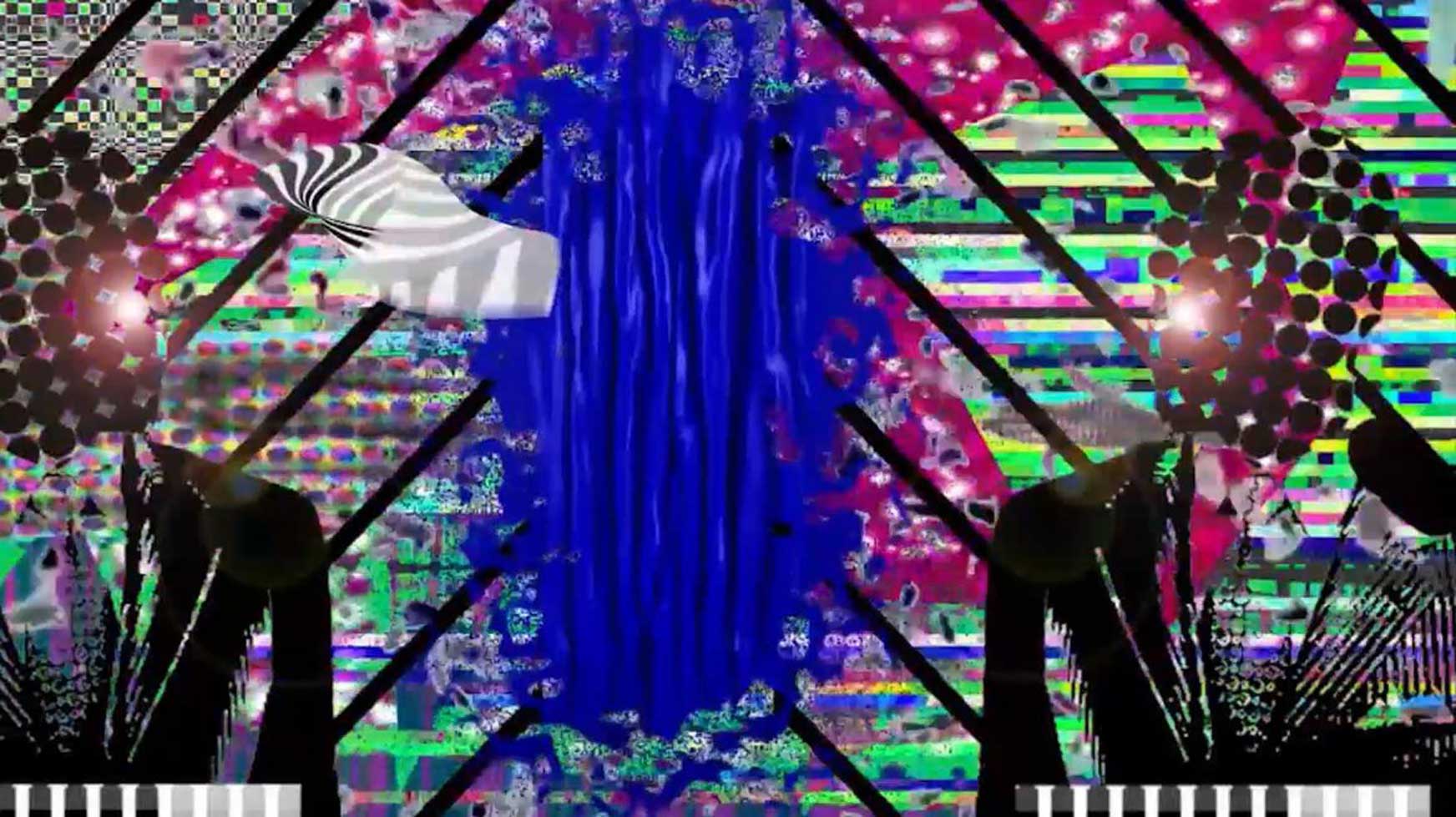
MARJAN MOGHADDAM: Non-Binary Nude Glitch with Generative Fractal Filigrees — “Non-Binary Nude Glitch with Generative Fractal Filigrees”— This, #digitalbody which employs chronometric sculpture and is modeled specifically for an animated painting composition has previously appeared in several of Ms. Moghaddam’s #Arthacks on Instagram. The figure expands on the nude as a non-binary, post gender form, engaged in self articulation and self kinemation through performative motion capture, SFX and Ms. Moghaddam’s signature glitched figurative style, exploring the plasticity, elasticity and the material ambiguity of the digital through its high-tech tools. The background employs fractals, which Ms. Moghaddam has used extensively in her 1990s art as chaoscapes, or the inherent generative landscapes and filigreed visual motifs of the digital.
MARK RAMOS: Virtual Topographies — “Virtual Topographies”—Generates a series of virtual topographies in 3-D space using a mix of google earth images, in-software textural assets, and google street views. Built with OpenFrameworks and Cinema 4D. Virtual Topographies is a liminal digital landscape. A border space where boundaries between data and IRL objects are permeable and transgress upon another. Mark Ramos is a Brooklyn-based new media artist. His work is often concerned with using digital technology as an intermediary to explore the intangible. Mark is constantly inspired by technology’s ability to make visible, audible, or thinkable that which is normally hidden. He works with the mediums of physical computing (using computers to sense and react to the physical world), software programming and digital sculpture to create interactive, installation pieces that facilitate encounters with our own uncertain digital futures.
MIKEY PETERSON: Slip Away — “Slip Away”—Memories diverge from the experiences they intend to mirror. They emerge as an alternate reality we create and revise over time. These visions skew, as our minds focus on fragments of the original experiences - sometimes these visions warp the event to the point where they no longer represent the event but create an alternative version, a dream-like new reality that can influence our present selves. Maybe our selves and our lives are built upon this process of useful mis-remembering. In this one-shot video, buildings hide behind a natural impressionistic haze. The imagery is familiar, but it’s always at a distance, as movement, light, and sound reinforces its surrealism. What we see is in constant flux, and the same can be said of what we view as Truth and Self. Mikey Peterson creates moving images influenced by pre-CGI science fiction films, experimental cinema, and sound collage. Through distortion, manipulated sound, and organic abstractions, Peterson’s work dramatizes subtle anomalies found throughout our world in order to reveal other truths about these events.
MOMMA TRIED: this iis sn’t — “this iis sn’t” explores the sensualism of Internet aesthetics and ASMR videos, examining the erotic subtext and tension often present in these forms of media. Individual scenes from “this iis sn’t” also appear as augmented reality content in Issue 3 of Momma Tried magazine. Momma Tried is a transmedia art project focused on installations, emerging technology, and a print periodical by the same name. Rooted in the confrontation of cooperative fictions, much of their work asks: “Are history and fiction interchangeable?” and “How does art program the future?”
MYRIAM THYES: SMART PANTHEON — “SMART PANTHEON“— Hands of various people use their smartphones. The displays don’t show any app – only the sensual movements of the hands count. Each pair of hands plays both roles from Michelangelo’s “Creation of Adam” at the Sistine Chapel: God father and Adam, whos fingers touch each other. Smartphones are the new saints to which we cling and who guide us on our ways – they are the amulets of our time. Myriam Thyes is a new media artist from Switzerland and Luxembourg, living in Germany.
PETER WHITTENBERGER: What’s the Worst that Can Happen? — “What’s the Worst that Can Happen?” is an abstract reflection on our inability to control time and how it shapes our lives. As a species, we can try to prepare for the future with education, career paths, who we spend time with, and who we love. Ultimately we can only do so much, as fate, God, the Dharma, luck, whatever decides how our lives will unfold. My intention is to create a fluid composition that encompasses the randomness of everything that exists in linear time and how that time forms the content of our lives. Peter Whittenberger is an interdisciplinary media artist whose work explores contemporary definitions of “self” in relationship to the greater human narrative.
REGINALD BROOKS: BIM + PT + DNA + Zika — “BIM + PT + DNA + Zika“—It is suggested that the pentagonal geometry of the virus allows it to insert itself within the decagonal geometry of our DNA, perhaps spiraling in along the DNA double-helical axis! The pentagonal structure — at the core of the icosahedral structure that the majority of human viruses reveal — is at the heart of the connection between geometry and biology. We know viruses insert themselves into the chromosome and redirect it to make copies of itself (and more). Would not the highly geometric viral population be of the same or similar geometry of the host population it exploited?
SANGJUN YOO: nevertheless — “nevertheless “—This video work utilized a face-detecting algorithm with image processing of live streaming broadcast TV. The face in TV signal is an instantaneous real-time transmission that has implications for its physical existence, also the duality between the screen and spectator. This video requires a durational commitment of viewers to reveal the delicate nuances between appearances to examine its time-based changes, which allows extending the spectator’s own narrative experience. Sangjun’s work has been most influenced by his experiences of travel, which have included exhibitions and residencies in multiple locations. These experiences have inspired the strain of his current work in installation and new media art, which is influenced by phenomenology and infused with an account of existence.
SHELBY SHAW: Everything Looks the Same — “Everything Looks the Same “—To be viewed on loop, this video is made as memento mori using photographs I received from my father on his birthday, text from my perspective, and a color gradation to mimic how structure exists even in what is temporal: familiarity and similarity quickly die. Shelby Shaw is a multidisciplinary writer in New York, recently invited into the Images Research Forum at the 31st Images Festival. Shelby is Program Coordinator for Projections at the New York Film Festival, the section of artists’ films and experimental moving images, and works with the IFC Center in Manhattan.
SMISKO ACKERMAN: Membrane — ‘Membrane’ is a film that explores our most innate humanity through a digital lens. By exploring the human anatomy through 3D and computer generation it imagines a world of virtual bodies; a limitless lab to grow cyborg anatomies. By fabricating organs that are malleable, permeable and unnatural, ‘Membrane’ looks at virtual cells- unbounded and undefined. This binary biology is both tactile and immaterial. We feel it stretch and squeeze but we cannot touch it. It represents the limitations of our selves and the limitlessness of the cyborg. Molly Smisko & Don Ackerman are a digital artist duo from New York & London respectively. With a background in textiles, virtual reality and computer generation they explore tactility within digital material and the blurring of digital and physical boundaries.
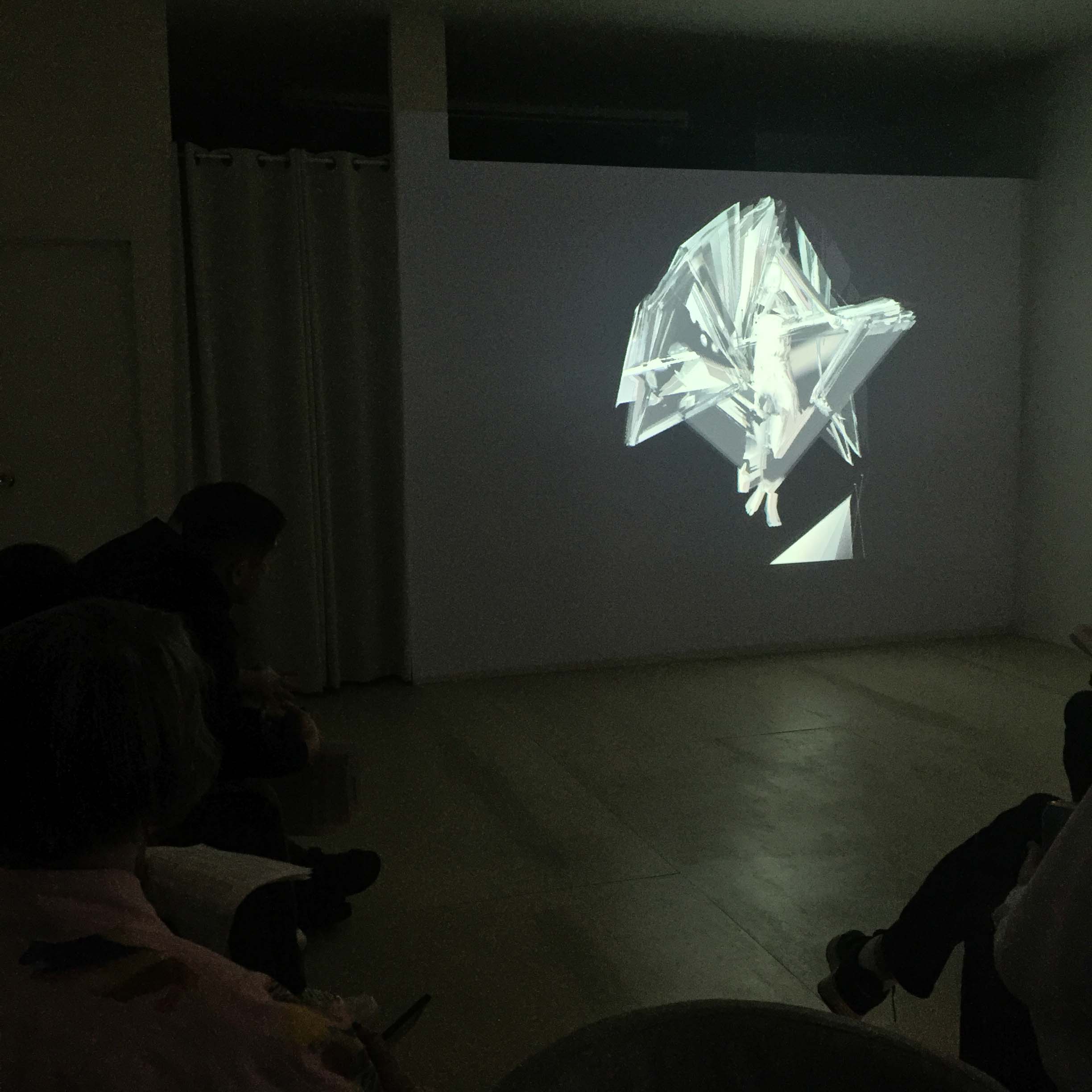
SOPHIE KAHN: Synthetic Statues — “Synthetic Statues”—The precise 3d scanning technology I use was never designed to capture the body. When confronted with a moving figure, it receives conflicting spatial coordinates, generating a 3d ‘motion blur’. The scanning process strips color from the body – a scan of the face resembles a white digital death mask, and a scan of the body could be a marble classical sculpture, missing limbs and the paint that once animated it. In this work I have highlighted the classical echoes generated by new imaging technology, along with the eeriness inherent in these new modes of seeing.
TARYN WARD: Civilized Landscapes — “Civilized Landscapes” begins with ambient sounds and looped frames from Paramount Picture’s 1960s painted landscape intro. This recontextualization isolates the landscape away from its original profit oriented and promotional intent. The sequence is then compressed with over 50 years of different Paramount intros, immediately obliterating its newfound serene landscape while creating an overstimulating and overly commercialized scene. Taryn Ward is a visual artist currently studying and living in Rochester, New York, USA. Using both static and moving imagery, his work is often predicated on a conceptual basis and thematically relates to unconventional landscape and idiosyncrasies.
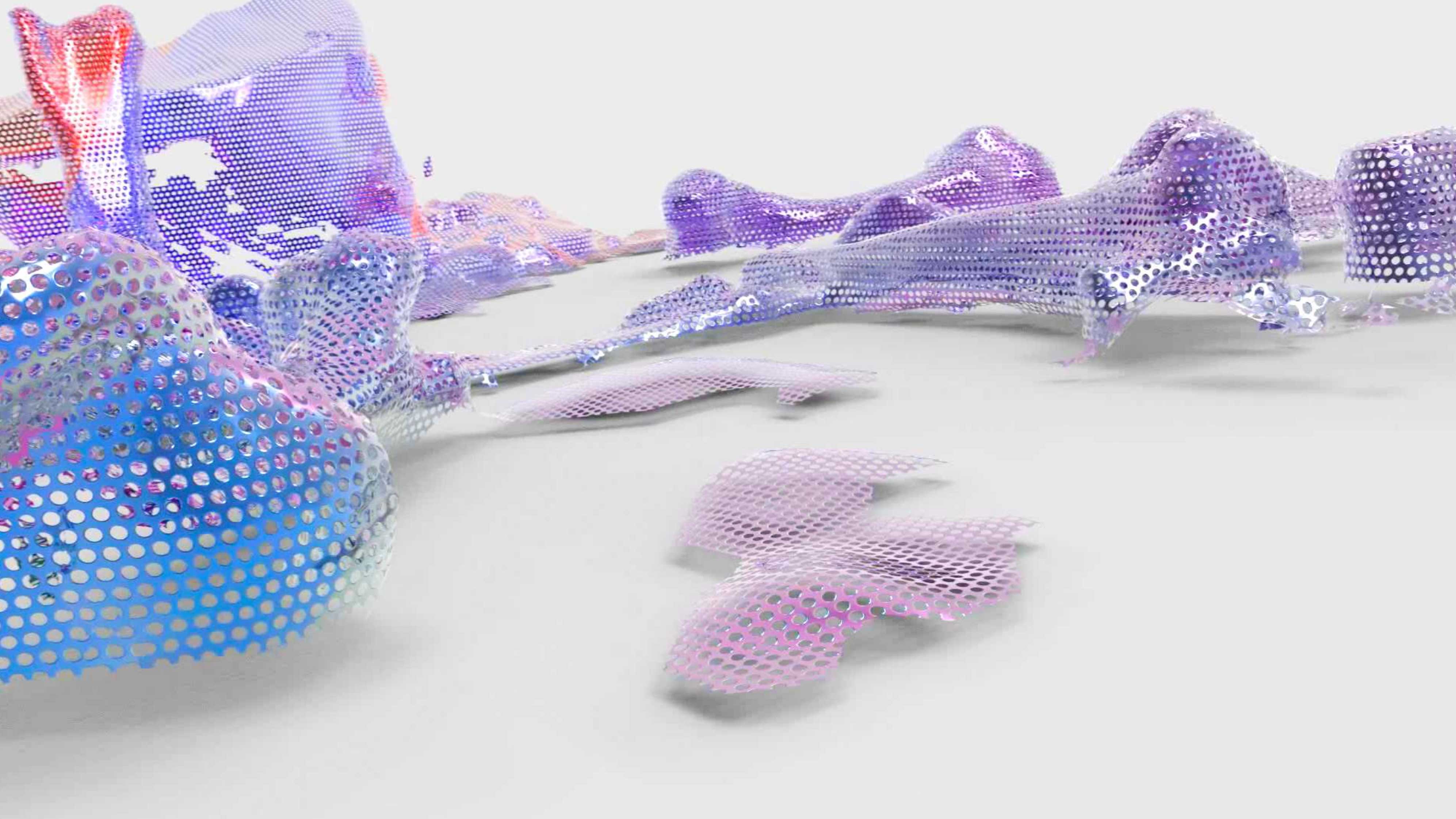
TIMOTHY EARL NEILL: Digital Artefacts (Chernobyl) — “Digital Artefacts (Chernobyl)”—An “artefact” is an anomaly observed or any unintended matter in the failure of a digital process, especially one introduced by a new or experimental technology. In this body of work, I have created a series of Digital Artefacts; derived from a collection of 3D scanned objects generated during a research expedition to the Chernobyl Exclusion Zone. The fragmented matter in the images and animation is the product of the failed technological process by which they were produced. More aptly, this emergent, self-organizing matter is generated from the intended malfunction of the 3D scanner, resulting in the digital entropy, or fragmentation, of the resultant object.
WAYNE MADSEN: Ghosts — “Ghosts” is based on a Perlin noise algorithm -- a form of randomly generated values in a computer that look more organic than traditional random seed values. Referred to as ‘procedurally generated’, the random values build on previously assigned computations. This approach has been used in computer graphics for automatically creating natural looking landscapes in video games. The computer art I create uses generative algorithms and small, random variations to develop unique views each visit; I have written the system, but it is the computing device and the viewers, which apply their own ‘creativity’ into what is seen.
100% tax deductible donations supported by Fractured Atlas